Experience Design & Cultural Mediation
Ramakien Murals Experience
Cultural Mediation
UX Research & Benchmarking, Interaction Design, Cultural Mediation, Wireframing
Summer 2025 & March 2026
Overview
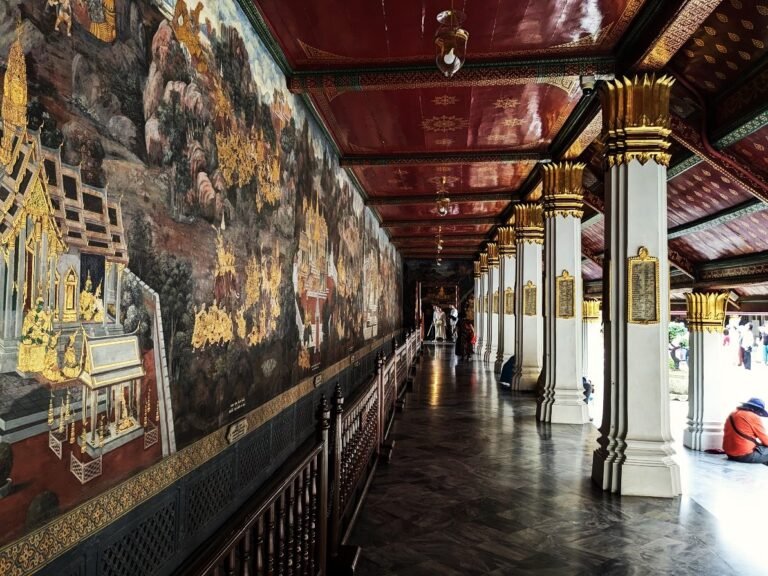
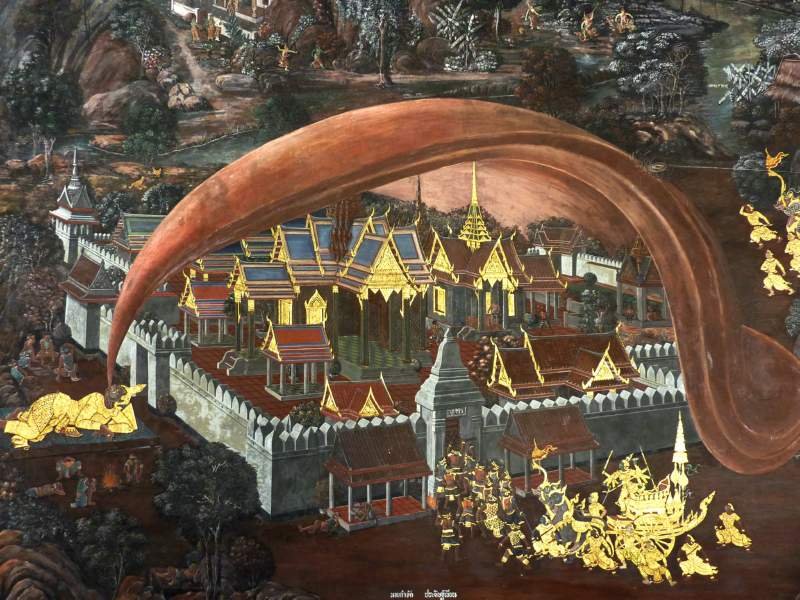
In October 2024, I visited Bangkok’s Grand Palace, where I discovered the Ramakien murals illustrating the Thai epic of Phra Ram. Deeply rooted in Thai culture, this story is depicted through murals commissioned by King Rama I in 1797. While I was struck by their richness and visual complexity, many visitors seemed to pass by without truly engaging with them.
This observation led me to explore how a digital experience could offer a different way of approaching the frescoes, allowing both foreign visitors and Thai audiences to discover or rediscover them.
Goals
The experience lacks accessible mediation tools, which makes it challenging for visitors to understand and navigate the Ramakien narrative. This project aims to explore how a digital experience could encourage a more active, personal, and meaningful engagement with the frescoes.
Research
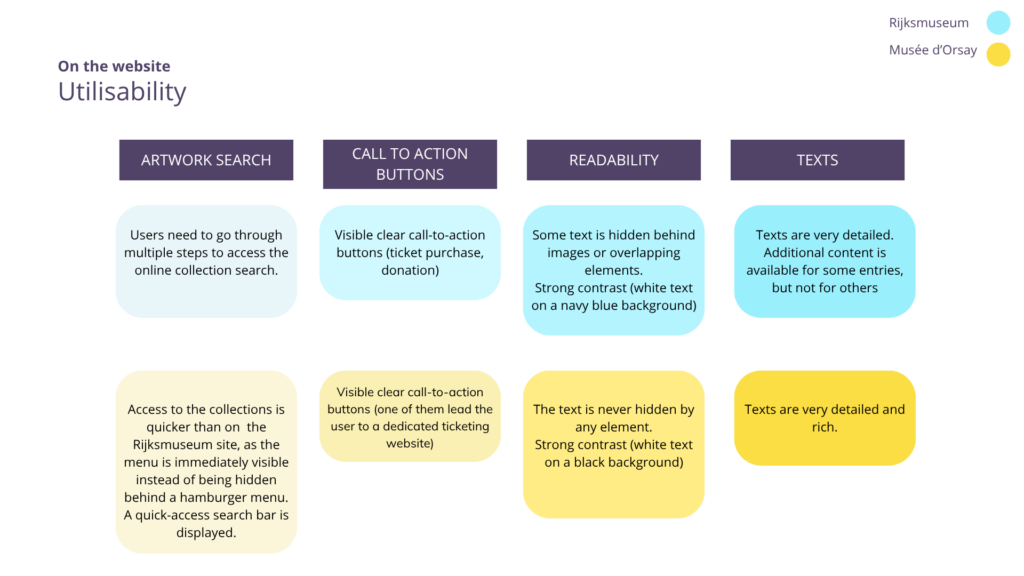
I conducted a comparative analysis of the Rijksmuseum and the Musée d’Orsay to examine how each institution approaches cultural engagement. These two contrasting approaches provided an interesting starting point for thinking about mediation. The first provides a more user-centered and innovative experience, whereas the second adopts a more traditional approach in line with European institutional standards. I conducted this comparative analysis, assessing both their digital and on-site experiences through 89 criteria structured into seven key categories of Peter Morville’s Honeycomb (such as usability, accessibility and findability).
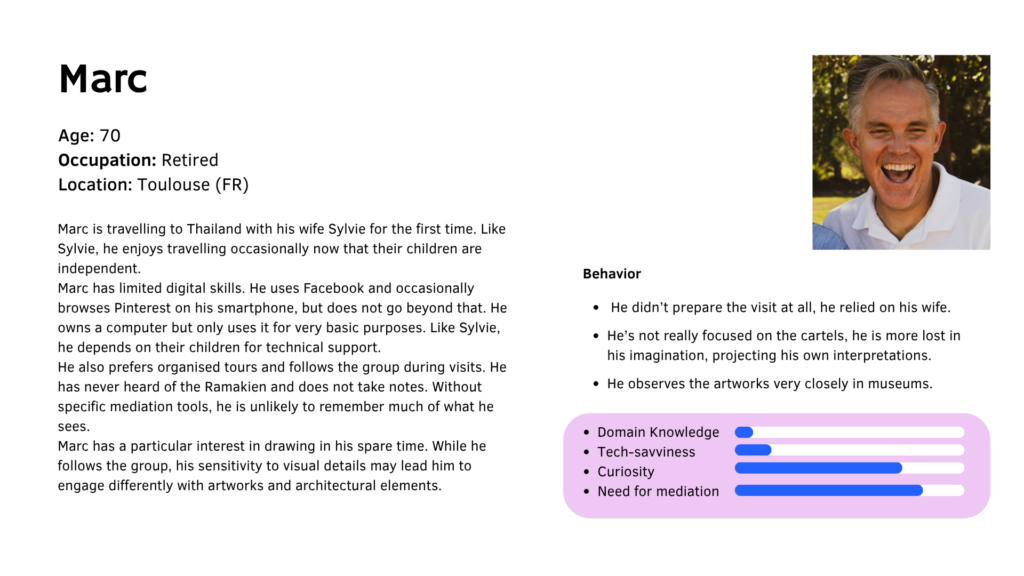
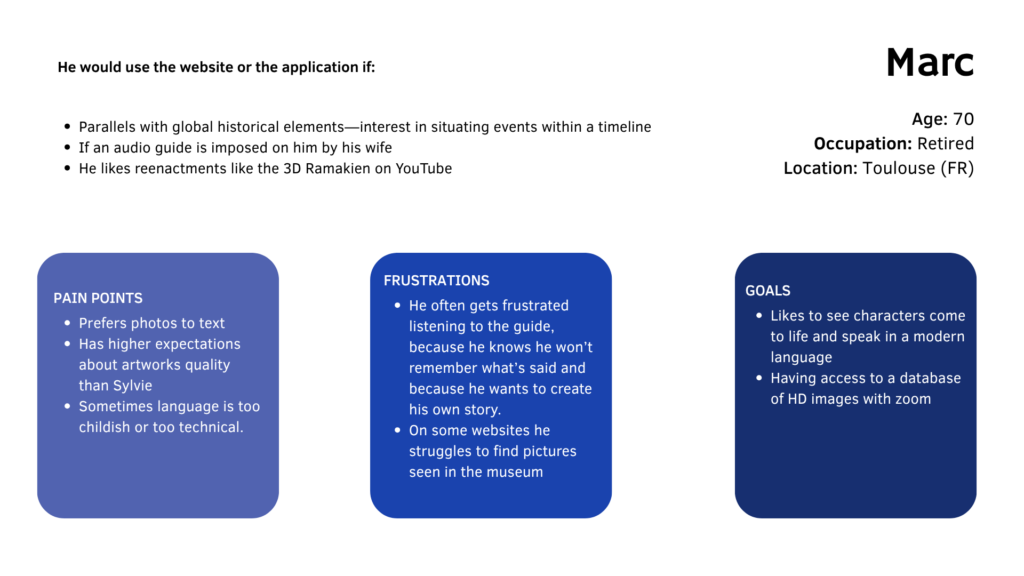
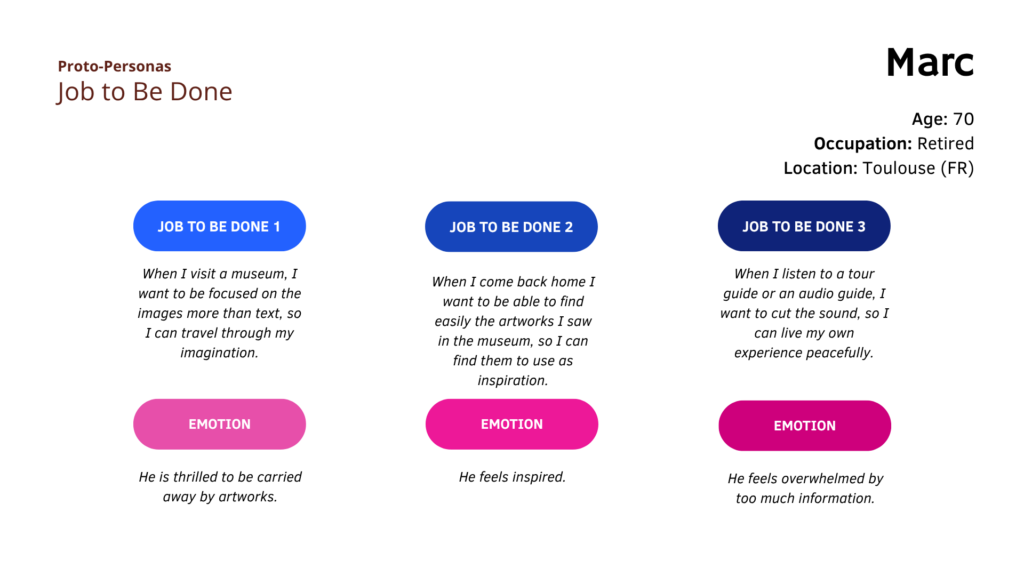
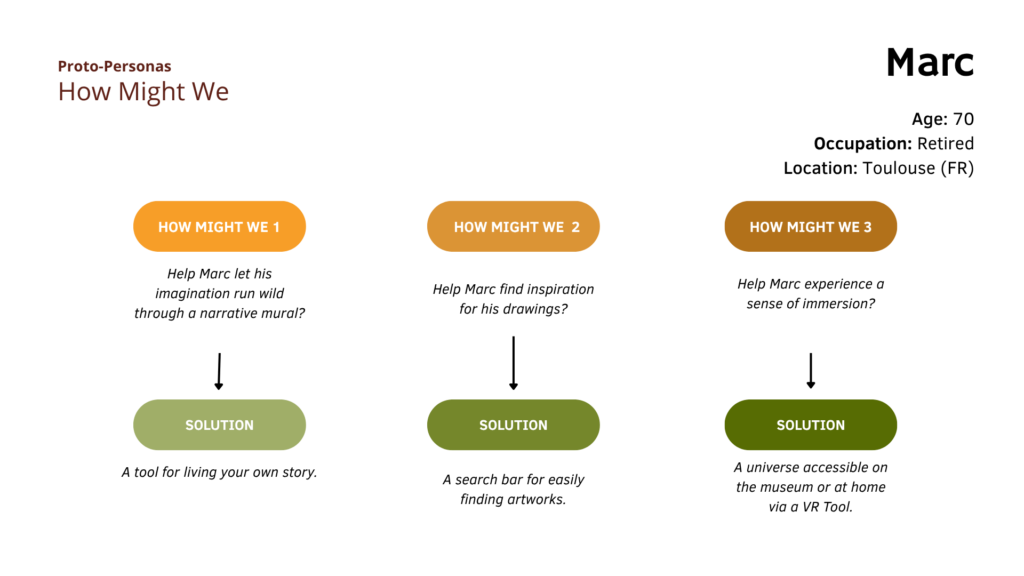
Alongside, I developed five proto-personas representing a range of visitor profiles and mapped their needs against existing experiences in museums, their pain points and goals. I then used Jobs to Be Done and How Might We to design features tailored to users’ experience when engaging with the Ramakien murals.
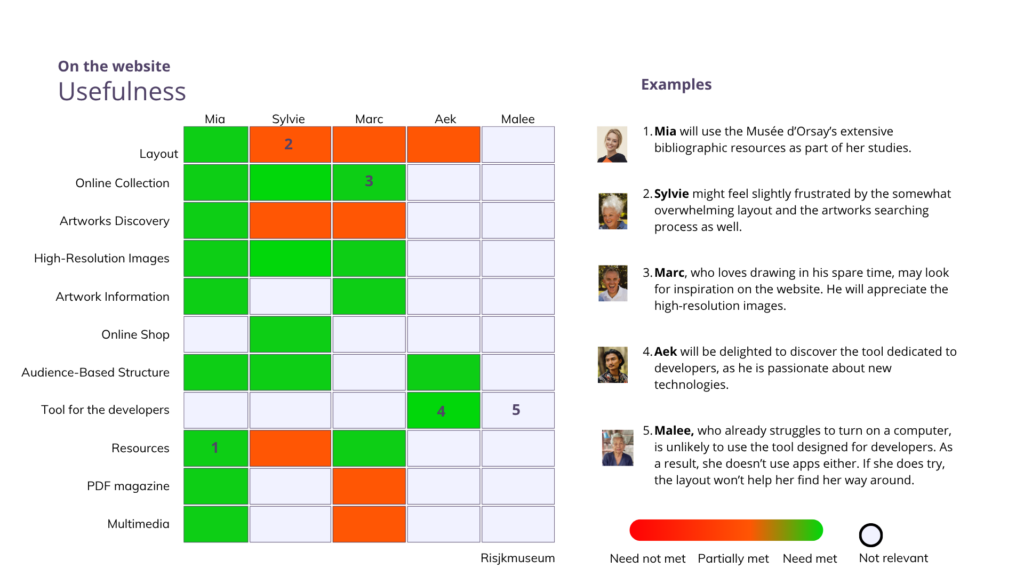
I also created a framework to evaluate how each criterion addressed my five personas’ needs in both Rijskmuseum and Musée d’Orsay (fully, partially or not at all), which revealed key insights and opportunities for my application design. I complemented the analysis with detailed and concrete explanations to uncover the underlying causes.
To broaden my perspective, I analyzed three digital experiences (Pompeii, Google Arts & Culture, and Brancacci POV) to understand how they support storytelling, exploration, and user engagement and to identify opportunities to inform my design.
Insights
The Ramakien frescoes present a dense and continuous visual narrative that offers no clear entry point for visitors. Without prior knowledge, it becomes difficult to understand where to look, how to follow the story or how the scenes connect.
This creates a gap between the richness of the content and the way visitors engage with it, which can feel overwhelming rather than immersive. This is particularly true for audiences unfamiliar with Thai cultural and narrative codes.
It also highlights the need for flexible, layered experiences that can adapt to different types of visitors, from first-time tourists to more knowledgeable audiences.
Solution
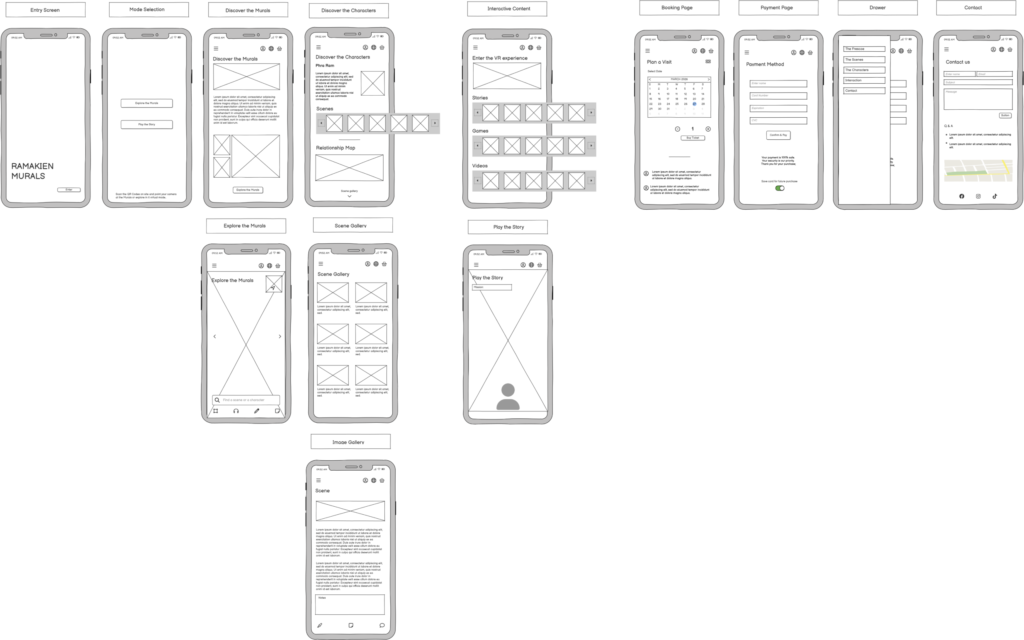
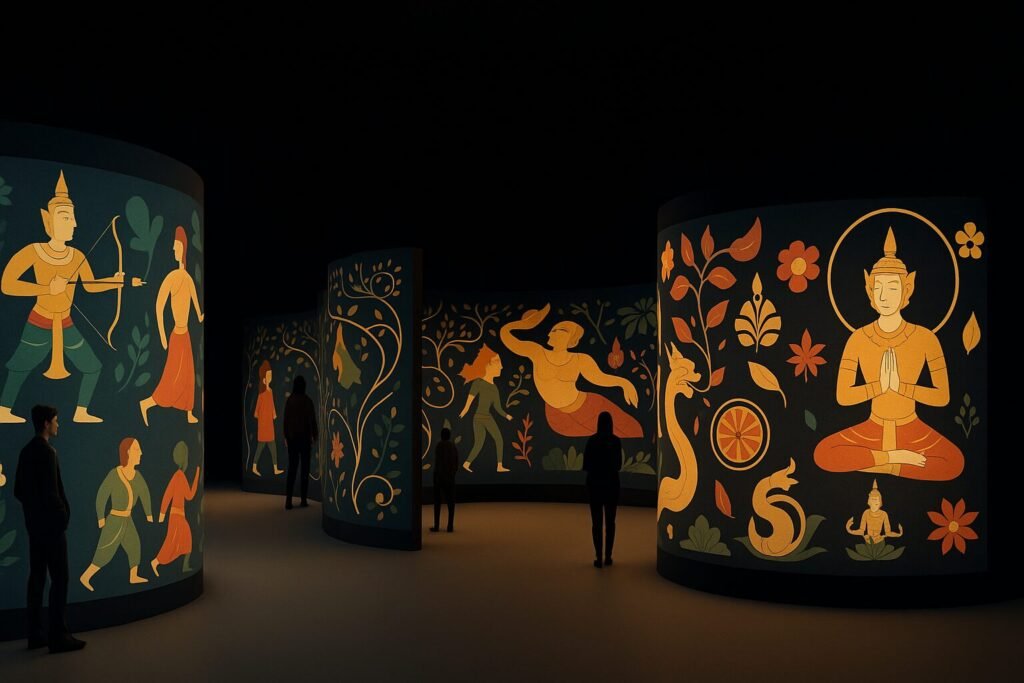
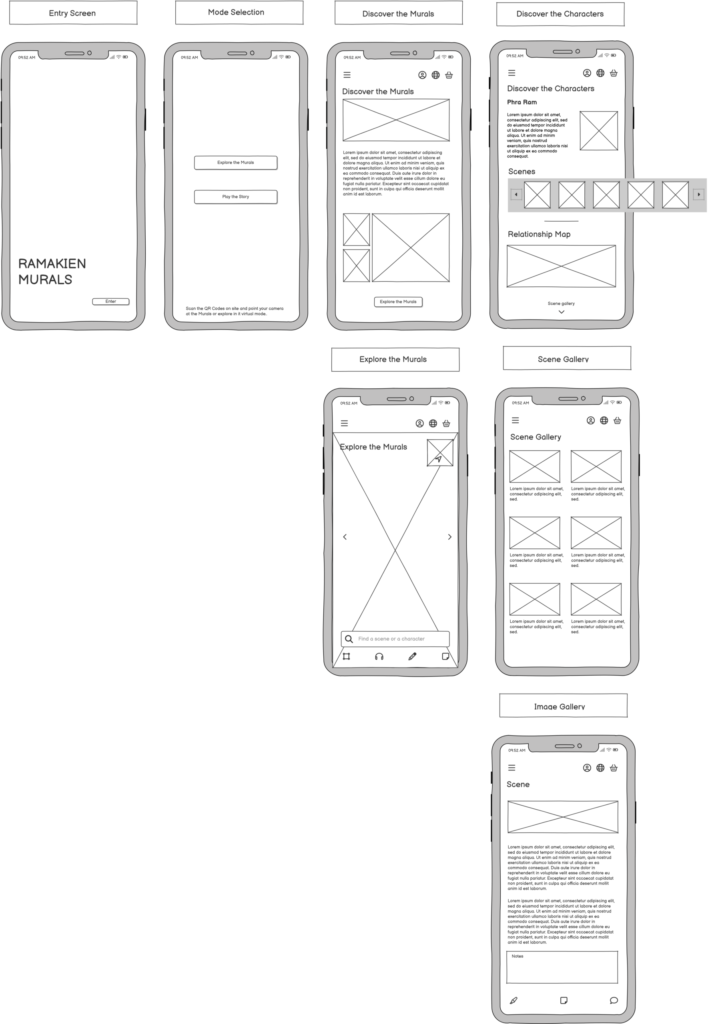
- “Explore the Murals”: an interactive exploration layer, accessible on-site, at home, or as an interactive projection mapping installation featuring three immersive environments. Users can point their device at the frescoes to reveal contextual information, zoom into details and progressively build their understanding through interaction.
This approach enables both playful, exploratory discovery and more goal-oriented research through a search function. It accommodates different levels of expertise, serving both researchers with specific needs and curious users with little prior knowledge.
Through projection, the experience can also reach an international audience, opening up new opportunities for the wider dissemination of the Ramakien murals, while transforming the experience into a playful visual exploration, where users are invited to search, spot details, and uncover the richness of the murals.
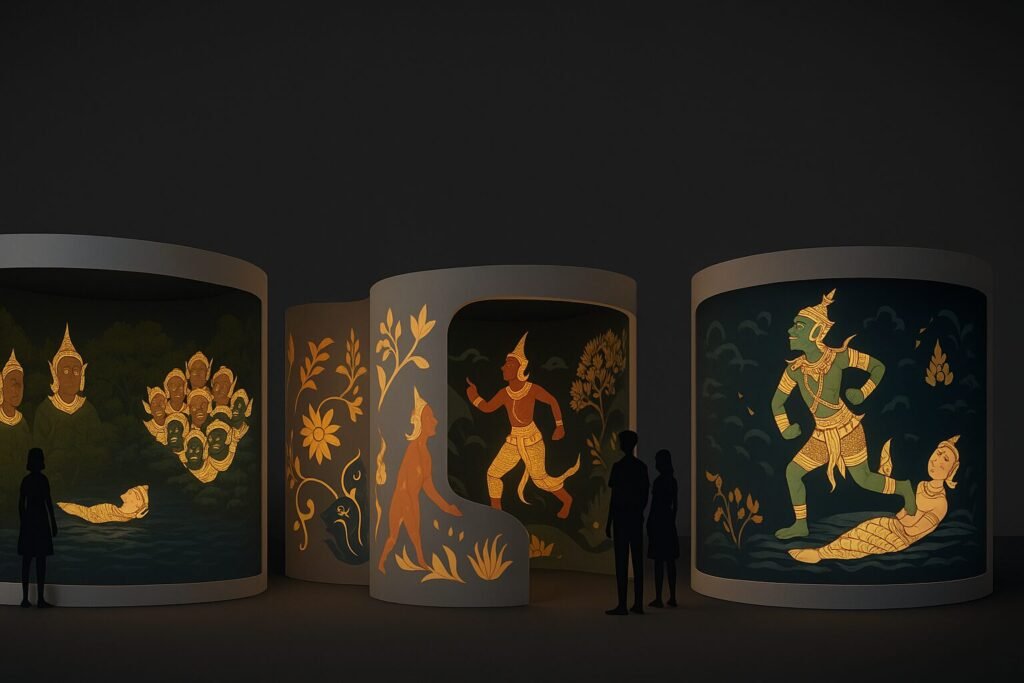
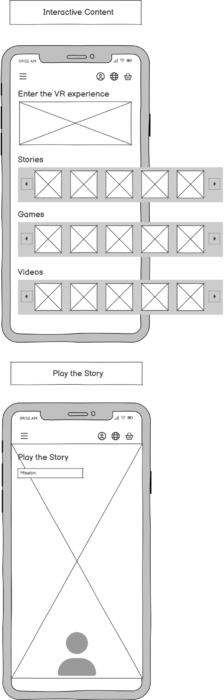
- « Play the Story »: a narrative-driven experience, supported by video, where users embody a character and engage with the story through a mission-based journey, offering a more immersive and personal entry into the Ramakien.
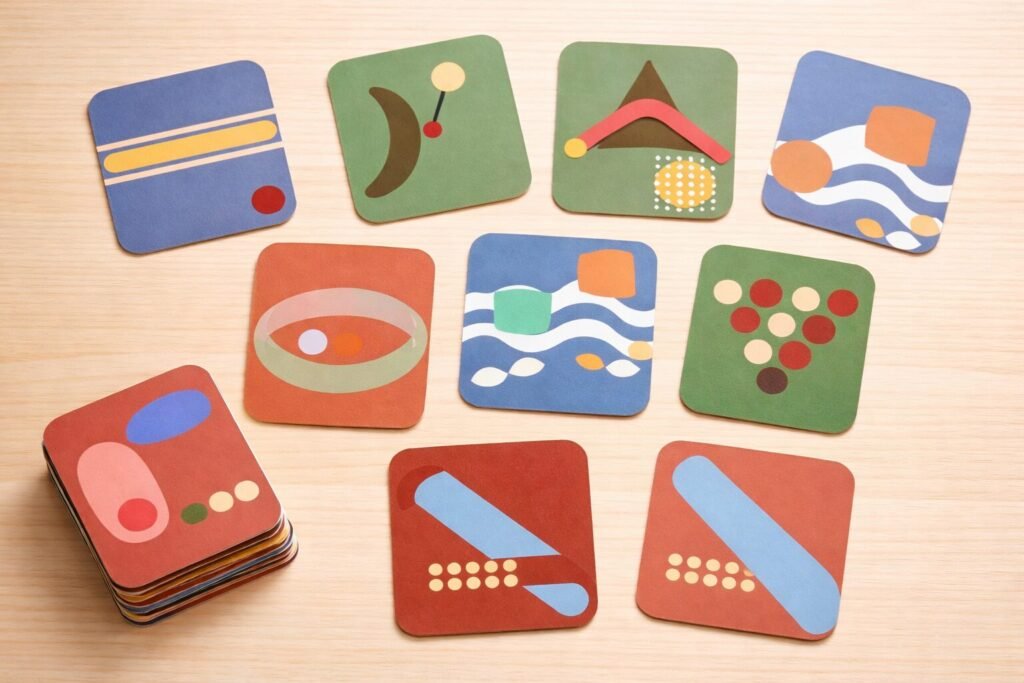
I also explored the idea of a mobile and on-site card-based game as a complementary experience, created with a minimalist design to help users familiarize themselves with the key moments in a playful way.

I ensured that each proto-persona’s needs were addressed through tailored content and dedicated features such as:
- Testimonials to build trust
- Narrative content for children to spark imagination through epic storytelling
- A note-taking tool enabling students to work more efficiently while helping them grasp the complexity and diversity of characters.
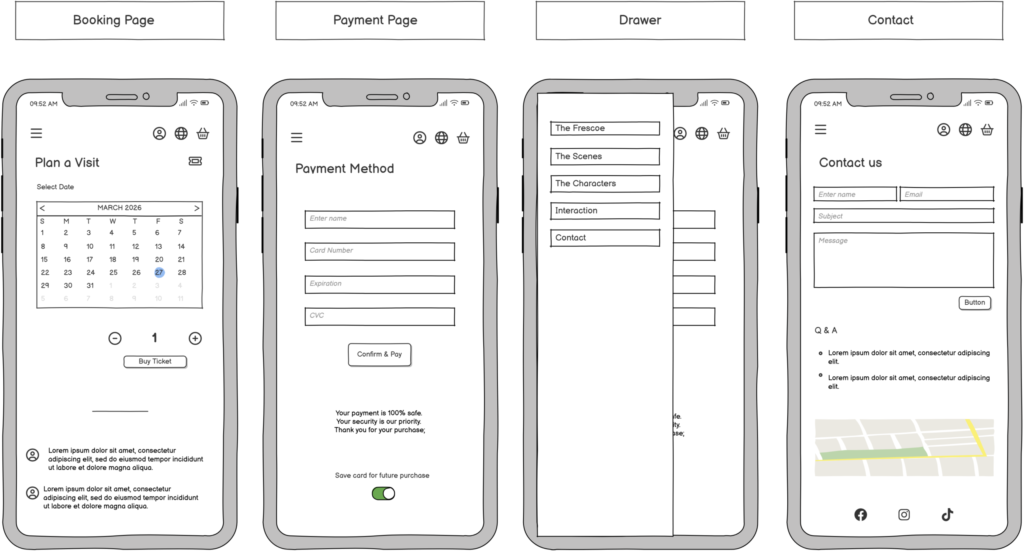
Throughout the design process, particular attention was given to accessibility and localization (e.g. payment methods, screen visibility in sunlight, …) ensuring the experience resonates with both Thai and international audiences in this specific cultural context.
By extending cultural mediation beyond the physical space, it opens up new ways of connecting with the artwork.
To ensure the application’s relevance and continuous improvement, I defined a set of key metrics:
• Adoption: number of downloads and active users
• Engagement: frequency of use, time spent, and interactions with key features such as “Play the Story”
• Experience: ability to navigate the frescoes and follow the narrative
• Feedback: user reviews and testimonials
• Reach: users in Thailand and internationally
• Conversion: booking rate after using the application
What I have learned & What I would improve
I began this project before starting my master’s program in the summer of 2025 ; revisiting it in March 2026 allowed me to refine and deepen my approach.
Methods: If I were to revisit the project with my current skills, I would conduct user interviews to better validate assumptions and ground the design in real user needs. I would also integrate more insights from Thai cultural mediation practices to balance my perspective.
Real-world testing: If I have the opportunity to further develop the project, I would take these wireframes to test the narrative flow with actual visitors in front of the Murals or people remotely and run usability tests.
High-fidelity & Accessibility: The next step is to move from wireframes to a UI that respects Thai visual codes while ensuring high readability in bright, outdoor conditions.
Mobile-first & Local habits: I would refine the interface to align with common mobile patterns in Southeast Asia, focusing on connectivity and intuitive navigation.
This project nonetheless allowed me to explore the full UX process, from research to wireframing, and to approach a culturally significant subject with care, curiosity, and respect. I was particularly drawn to this project, as it reflects my long-standing interest in Thailand and cultural narratives.
If you’d like to see my visual and UI work, you can check out my Hostel Booking Case Study.
Tools: Miro (research and mapping), Notions (research), Balsamiq (wireframing), Canva (Visual Assets)